

Shakespeare Had it Right
His play Hamlet holds life-and-death wisdom
January 21, 2026
By Jim Towey
“To be or not to be, that is the question.”
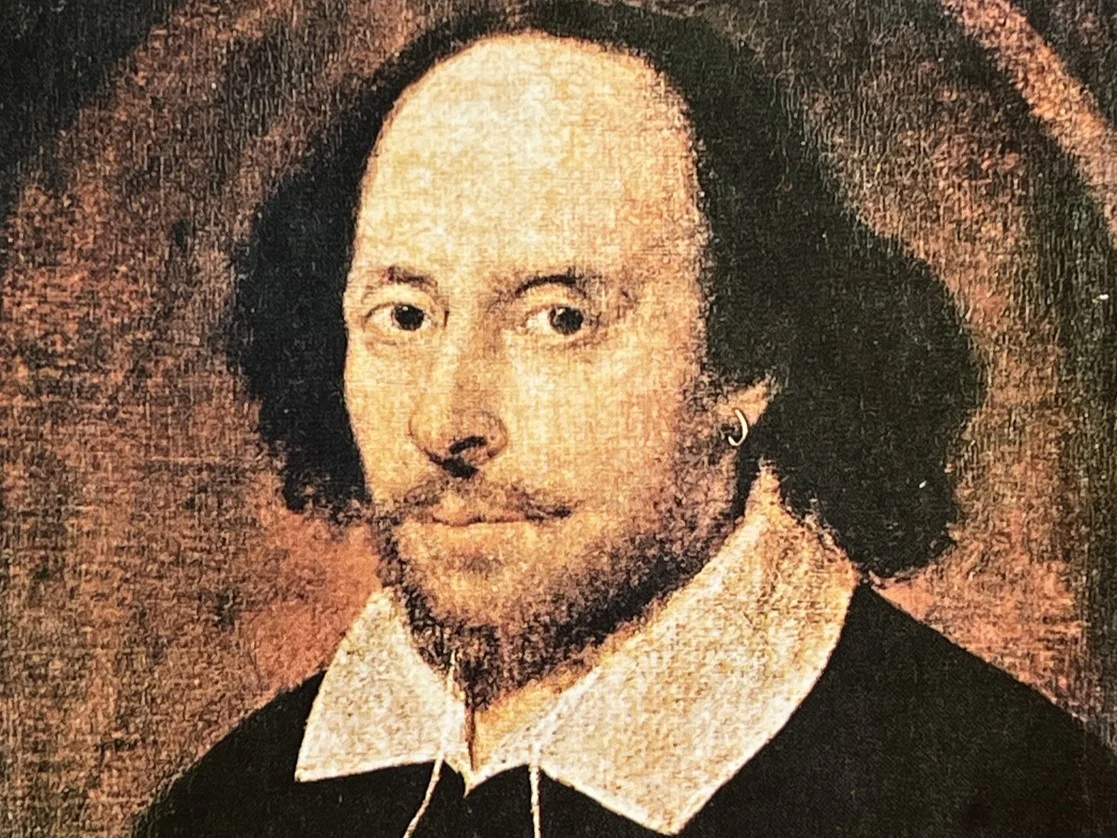
This most-quoted line of modern English literature, penned by William Shakespeare over four centuries ago, goes to the heart of a human existence mired in trials and suffering. When is one better off dead?
Depressed and life weary, hounded by enemies from without and within, Prince Hamlet wrestles with this question in one of the greatest soliloquies ever recorded. His tortured musings, which centuries later command center stage in the public debate over legalized assisted suicide, merit repeating:
To be, or not to be, that is the question:
Whether ‘tis nobler in the mind to suffer
The slings and arrows of outrageous fortune,
Or to take arms against a sea of troubles
And by opposing end them. To die – to sleep,
No more; and by a sleep to say we end
The heart-ache and the thousand natural shocks
That flesh is heir to: ‘tis a consummation
Devoutly to be wish’d. To die, to sleep;
To sleep perchance to dream – ay, there’s the rub:
For in that sleep of death what dreams may come,
When we have shuffled off this mortal coil,
Must give us pause.
What gives me pause is the fact that legislatures in 13 states in the U.S. have enacted laws to legalize physician-assisted suicide. Other states are hell-bent on following suit. Hamlet dissents. He rejects the “quietus of a bare bodkin” (a sharp knitting needle) to end life’s woes. He cites the “undiscover’d country” of the afterlife and the possible “dread of something after death” which, he says, “puzzles the will and makes us rather bear those ills we have than fly to others that we know not of. Thus conscience doth make cowards of us all.”
Body and soul
Shakespeare’s mention of conscience, of a moral order infused in the inner life of humanity, and of the eternal consequences for the choices we make in life, is illuminating. Natural law and the Judeo-Christian tradition uniformly posit that human beings consist of a temporal body and eternal soul. They maintain that earthly life ends in a death that transitions to something everlasting, a fate determined by the judgment of the One who established the moral order. Thus, our earthly actions have eternal consequences.
These days, to speak of death, judgment, heaven and hell is to be dismissed as moralistic, as intolerant of secular, enlightened beliefs. But in Shakespeare’s time, these subjects weren’t taboo. Shakespeare himself confronted them when his only son, Hamnet, died tragically at age 11.
The 2025 film, “Hamnet,” tells this story and is a must-see (trigger warning: bring some Kleenex). It captures the human anguish that accompanies heartbreaking death. Some scholars speculate that Shakespeare’s Hamlet, composed only a few years after his boy’s death, helped him process his grief and pain. In one scene after Hamnet’s death, Shakespeare stands at the edge of an abyss far below, contemplating a plunge that would exit him permanently, stage right. He softly and painstakingly summons the first lines of his immortal soliloquy and then steps back from the ledge and returns to his life. Conscience made no coward of him; it saved him.
Eternal consequences
When we give no thought to the eternal consequences of taking the life of oneself or another, we abandon millennia of observance of the Judeo-Christian mandate, “Thou Shalt Not Kill.” God alone judges the hidden qualities of these acts and actors. But when we normalize the practice of suicide, citing “the slings and arrows of outrageous fortune,” to wit, the failures of a health care system that treats pain poorly, systematically isolates the dying, and over-medicalizes end-stage care, we ignore life’s eternal dimension, the “undiscovere’d country” as Shakespeare described it. Instead of hastening death with a knitting needle through the heart, modernity has substituted an intravenous one to transmit the poison, much like the one used to murder Hamlet’s father, Claudius.
But I must break with Shakespeare on one point. It is not conscience that makes cowards of us all. It is silence. Good people saying nothing while the legalization of this inhumane practice steam rolls across our country, makes guilty bystanders of them. Regardless of how advocates of assisted suicide disguise the nature of their movement, as with euphemisms like “medical aid in dying,” the practice remains foul, not fair.
The well-connected and well-off may find refuge behind the phony statutory safeguards that aim to ensure their assisted suicides are voluntary, but the disabled, the miserable poor, and those with dementia will enjoy no such protections. The question, “To be or not to be,” will be answered for them.
Shakespeare’s question perdures. Some want terminally ill or disabled patients to believe that assisted suicide is a harmless, humane alternative to the “heart-ache and the thousand natural shocks that flesh is heir to.” They want them and their families to believe such a decision has no eternal consequences.
They protest too loudly, methinks.
(The views expressed herein are those of the author and do not necessarily reflect the views of Aging with Dignity and/or its Board of Directors.)