

The Visions of Shelley and Vonnegut
They foresaw our AI world
October 15, 2026
By Jim Towey
A friend read my recent piece on the threat AI poses to humanity and gave me a copy of Kurt Vonnegut’s Player Piano. I had never read Vonnegut or heard of this book, his first novel. In the forward, Vonnegut writes, “This book is not a book about what is, but what could be…at this point in history, 1952 A.D., our lives and freedoms depend on the skill and imagination and courage of our managers and engineers, and I hope that God will help them to help us stay alive and free.”
Player Piano deftly prosecutes the case against a world ruled by “machines” which have replaced workers and consigned them to meaningless employment. The displaced working class no longer felt needed or useful, and lacked the self-respect and sense of purpose that real work once provided them. This uneasy vibe is why the novel’s authoritarian government was always on the lookout for “saboteurs.” “Eternal vigilance was the price of efficiency,” the elites said.
Ah yes, efficiency! The new 21st century golden calf!
Vonnegut’s prescience
Vonnegut uses the image of the player piano – an instrument that plays music without the need of a human pianist – as a metaphor for the new order. Vonnegut’s prescience is downright eerie. Today’s AI masters promote universal basic income (UBI) for human beings displaced by technology. 70 years ago, Vonnegut observed that “people who have nothing to give, wait to be given something,” and in his machine-driven world, a UBI was a necessity.
Vonnegut also foresaw ChatGPT. He wrote of “the electronic writer” that made culture “very cheap.” Witness today’s AI slop when prompted for something creative. Vonnegut even accurately predicted that paid athletes would be the ruination of collegiate sports in his fictional society! But I digress.
As for the Big Tech masters who dictate much of our way of life, Vonnegut knew them before they were born. He wrote, “the men at the head of the procession of civilization…haven’t the vaguest notion of what they are doing to the world.” Vonnegut’s machine lords were hell-bent on proving to the individual, “I’m not good, we’re no good, because we’re human.” That subtle but severe messaging underlies the AI revolution today.
The hero in Player Piano rebels against machine tyranny and protests that “the main business of humanity is to do a good job of being human beings, not to serve as appendages to machines, institutions, and systems.” If you want to know how his populist plan “to take the world away from the machines” went, sorry; no spoilers here.
Shelley saw it coming
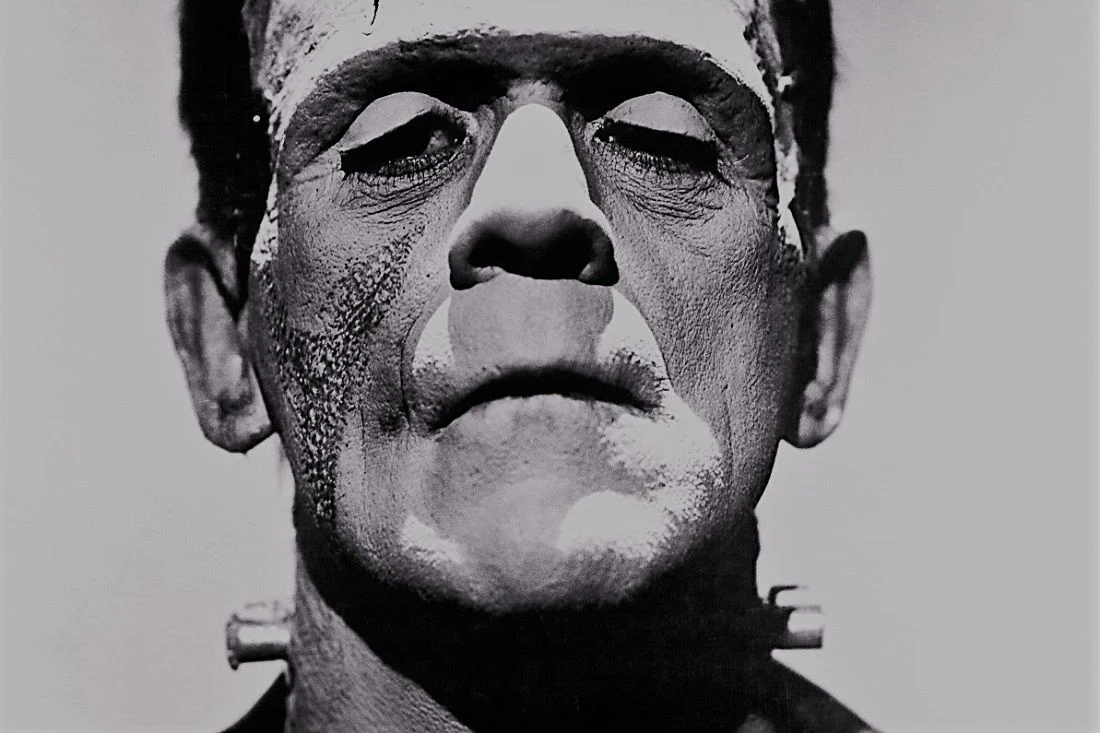
You may have seen the warnings about rogue AI that dominated the news cycle recently. Is the new AI technology going off script the way Victor Frankenstein’s monster did? Mary Shelley’s novel from over 100 years ago is every bit as prophetic at Vonnegut’s work. Her iconic tale of a brilliant scientist who regrets that he once “trod heaven in my thoughts, now exulting in my powers, now burning with the idea of their effects,” words that Sam Altman or Marc Andreessen could have uttered. Dr. Frankenstein hoped that by bestowing life on lifeless matter, “a new species would bless me as its creator and source.”
Such lofty ambition isn’t too far removed from that of the AI “engineers and masters” who embrace transhumanism and a world free from disease and suffering. But Frankenstein miscalculated. “I had unchained an enemy among [the world],” and he attributed his thirst for scientific discovery to a “mad enthusiasm that hurried me on to the creation of my hideous enemy.” Those words could be coming out of Silicon Valley now. The monster of Frankenstein commanded – “You are my creator, but I am your Master – obey!” – and those words echoed through Anthropic’s corporate headquarters recently.
But not to worry. The same creative genius that illuminated the imaginations of Vonnegut and Shelley and those of the great writers, composers, poets, comedians, artists, inventors, and leaders, will find a way out for humanity. Shelley’s monster professed remorse and pledged to end his own life and the mortal threats he posed. Did it do as promised? Shelley didn’t say. But we do know that monsters lie, just as our AI masters have, repeatedly.
Coming rebellion?
Today’s young people know when they are being lied to. I was on the campus of the Harvard Business School this week with some students. The bright men and women I met are worried whether their intellect and talents will be usurped by AI. They want purpose-driven lives. Is a quiet rebellion brewing among Gen Z’ers?
Kurt Vonnegut and Mary Shelley described what happens when scientific curiosity, thirst for fame, and moral recklessness unite in the name of efficiency and invention. Can we learn from their stories? Can the course we are on be modified? I share Vonnegut’s prayer that a new cohort of “managers and engineers” will arise and “that God will help them help us stay alive and free.”
(The views expressed herein are those of the author and do not necessarily reflect the views of Aging with Dignity and/or its Board of Directors.)