

Jim Towey Interview: Was Mother Teresa a Bad Person?
The internet claims Mother Teresa was a fraud and even an evil person. What’s the truth?
October 2, 2026
By Max Towey
(Editor’s note: The following story and interview appeared October 2, 2026 in RocaNews. It is reprinted here with the permission of RocaNews.)
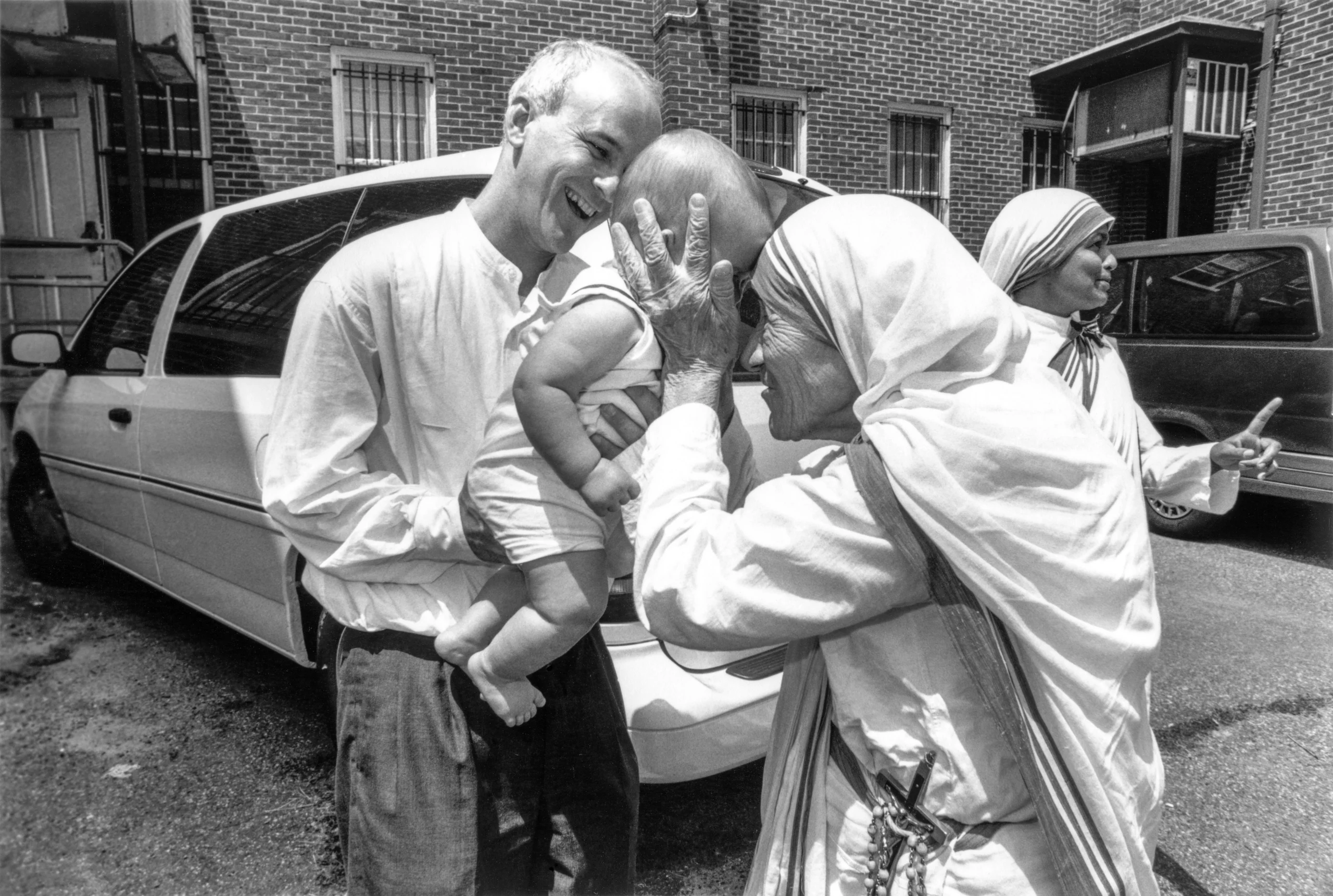
In the modern age, nothing is sacred. Not even Mother Teresa.
If you’re not acquainted with the conspiracies about the “Saint of the Gutters,” then allow us to catch you up. In various corners of the internet – and increasingly the mainstream – critics allege that Mother Teresa hurt the poor more than she helped them. More than a saint, this group says, she was a cult leader who drew power from the suffering of others.
The famed atheist Christopher Hitchens delivered the first mainstream takedown of Mother Teresa in his 1995 book “The Missionary Position.” In it, he called Mother Teresa “a demagogue, an obscurantist and a servant of earthly powers.” He claimed that she flew first-class; provided shoddy care to the dying; and lived a secret life of which the world knew little.
Since then, rumors and accusations have grown. In 2015, Vice published a piece titled “Mother Teresa Was Kind of a Heartless Bitch.” The next year, HuffPost ran a piece around her canonization – the day she became a saint – titled, “Mother Teresa Was No Saint.” The Independent ran a piece with an almost identical headline.
Their arguments centered around the same accusations that she refused to provide quality medical care to the poor despite having ample resources; that she performed forced baptisms on the dying; and that her organization, the Missionaries of Charity, had shady dealings.
So when she became a saint, not everyone was pleased.
But what’s the truth?
To find out, I spoke to one of the people who knew her better than anyone else. Her lawyer – and my dad – Jim Towey.
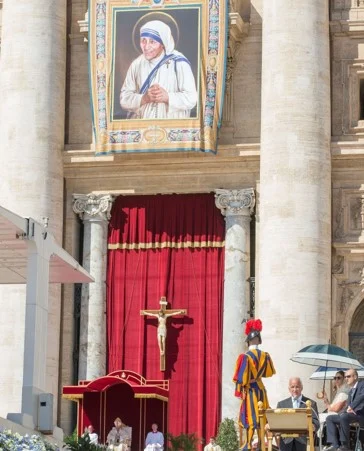
The day of Mother Teresa’s canonization was a special one for my family.
The Superior General of the Missionaries of Charity invited my dad to do the first reading for her canonization Mass. Before the crowd of 120,000, he delivered the reading.
My family’s ties to Mother Teresa and her organization, the Missionaries of Charity, go back decades.
My parents met volunteering for Mother Teresa in her AIDS home in Washington, DC. It was the first of its kind in the United States – nobody wanted to touch AIDS patients (literally) – and my dad was so moved by the example set by Mother Teresa and her sisters that he even lived at the home at one point, tending to dying patients in the evening.
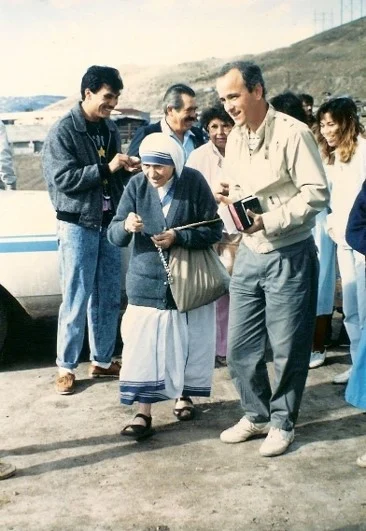
To make a really long story short, he had met Mother Teresa several years prior when he visited her in Calcutta, India, for a job he had on Capitol Hill. The sisters put him to work the second he arrived, and his pride – in his own words – compelled him to do it. Several decades of friendship with Mother Teresa followed, and while she passed away in 1997, my dad remains deeply involved with the Missionaries of Charity, traveling around the world to work with the sisters and doing their legal work pro bono. He also recently published a book on Mother Teresa that you can – shameless son plug against his wishes – find on Amazon or Simon & Schuster (proceeds go to the organization).
Over the years, I’ve seen news organizations report on Mother Teresa in a way that directly contradicted what my dad had seen firsthand. As the case against her grows more popular, I sat down with him to understand the truth, and that conversation is featured below.
I should also note that my birthday is August 26, the same birthday as Mother Teresa. She actually predicted it, though we can save that story for another day. Between that and my dad’s ties, I may be a bit biased here, but I give you my word that I tried my best to set that aside and seek the truth about the saintly woman.
Max Towey: Was there chatter about Mother Teresa being a bad person while she was still alive, or did it start only afterwards? Did Hitchens’ book two years before her death make a splash?
Jim Towey: Christopher Hitchens was a provocateur. So this was right up his alley, to take on a sacred icon in the culture and in religion. It was a twofer for him. It was unheard of to hear public criticisms of Mother before that. He wrote his book 15 years after she won the Nobel Peace Prize, and she had such an international stature at that point.
And so for him, he was able to go after the Catholic Church, take down a sacred icon, and get a lot of laughs from his drinking buddies. So it was a win for him. And what he claims is now being shown as factually inaccurate. But at the time, Mother wasn’t going to defend herself. People just ignored it.
Max Towey: His main criticism – which has since developed its own life on the internet – is that her medical care, especially in places like Calcutta, was primitive and unsafe. That their homes had terrible conditions and the nuns reused needles, etc. What’s your response?
Jim Towey: Well, there are two problems with his argument. One is he’s applying a first-world standard to a third-world situation. Calcutta [one of India’s biggest and poorest cities] in 1980, when he met her, had a broken health care system. There were barriers to getting medicines, to getting medical equipment. So he was completely out of touch with the on-the-ground reality. He went in for one day to meet her, and then he left, and he had already gone in there with his mind made up.
And so when he walked into the home for the dying, he saw none of the trappings of a hospital. Well, that’s the second problem: She wasn’t trying to run a hospital. She was taking people off the streets, keeping them clean, and doing the best with what she had in the way of medicines. But she wasn’t trying to run a hospital.
And if Hitchens wanted to open a hospital, he should have. But she was trying to give these people a place to die in peace, with dignity. And over the years, they’ve improved the care they provide in the facilities. But he wants to argue she had all this money – why didn’t she have better supplies for the people that were in her facility?
And the answer is, A, she couldn’t get it, and B, she wasn’t trying to run a hospital. He has no realization that the poor had no recourse anywhere. So he’s just completely out of touch with the overwhelming misery and poverty of the people that she was in touch with every day. So, you know, it’s easy for him. It’s a cheap shot to sit there and pick at it. Why doesn’t she have more morphine? Why doesn’t she have new, clean needles for every single person?
It’s easy to say that, but it’s out of touch with the reality that you couldn’t get those supplies and drugs, and she wasn’t trying to be a hospital anyway.
Max Towey: Well, should she have been running a hospital?
Jim Towey: That wasn’t her calling. There were other Catholic orders that run hospitals or run schools or run job training programs – the things that India’s poor needed. She was on the front line, basically doing triage work with the lepers and the broken that were surrounding her and coming at her in such waves.
Her sisters weren’t trained to be operating a hospital, and she did not form the order to be a medical care provider. She responded to the needs of Calcutta and did what she could do to help these people that were dying outside her door. And so she would bring them in and clean them and love them and give them what she had in the way of food and medicine. But it just wasn’t her mission. Most of the Missionaries of Charity houses in the world are operating feeding centers and shelters for the aged. They don’t run hospitals and never have.
Max Towey: On that note, it might be helpful for people to better understand what the Missionaries of Charity do and how they help people.
Jim Towey: Who are the Missionaries of Charity? Mostly they are women who became religious nuns, and they’re paid no salary. They get no health insurance, no retirement plan. These are women that are in love with God and that are following the Lord and trusting that he will provide.
They took a special fourth vow that’s unique to the Missionaries of Charity, which is called “wholehearted and free service to the poorest of the poor.” That’s unique to them. So not only do these women not get paid, they don’t charge anyone – not the government, not any of the users or the beneficiaries of their services. They charge no one.
It’s all free. They just trust that God is going to provide. And God has. So they’re out there in 138 countries today – and at the time of Mother’s death, 120 countries – providing this wholehearted and free service. Typically, they operate homes for the aged or for orphans and for the severely disabled. They have feeding centers, and they also do catechism programs and natural family planning programs in the villages where they are. And they’re located in the poorest places on the planet, and usually the most violent places on the planet.
So they’re in Syria. They never left Gaza. They haven’t left Ukraine. They’re in Russia. They’re in Yemen and Haiti. And they never left – not after the earthquake, not after the gangs have come and burned down one of their missions. So these brave women provide a very sharp contrast to Christopher Hitchens on the couch, sipping his martini while he writes criticisms of what they did.
Max Towey: But does their work really matter? What’s a world without the Missionaries of Charity like?
Jim Towey: It’s a world that’s colder and crueler than it currently is for the poorest of the poor. When I was at Mother’s funeral in Calcutta in 1997, you saw the streets lined with the poor. They were like honor guards. But they knew what the Missionaries of Charity were doing in Calcutta, and that you could go and get care, and all of it for free.
And the poor know exactly what the Missionaries of Charity mean. The sisters don’t brag about what they do. They don’t do splashy ad campaigns. They don’t fundraise. So many people are unaware of who they are. They just know about Mother Teresa. But the 750 homes they operate all over the world are making a difference in the lives of the poor in those communities.
You know, it’s just impossible to describe the difference they make in the lives of those poor people. And I just think that the critics that are pointing to deficiencies in their care, they don’t realize what the world would be like for the poor people without the sisters. It’s completely transformative for them. And I’ve seen it over and over, in places like Haiti, in the state of Assam in northeast India, out in the middle of nowhere. They have this home with, you know, probably 40 or 50 severely handicapped people, and day in and day out they’re feeding them, clothing them, occupying them during the day, loving them.
You know, the world doesn’t count that for much. Nobody’s even aware they’re doing it. But God’s aware, and, you know, they’re there for those 50 people.

Max Towey: One of Christopher Hitchens’ main criticisms had to do with Mother Teresa’s management of finances. And there’s a 2013 University of Montreal study alleging that only a small percentage of the money donated to the Missionaries of Charity went to the poor. Is that true?
Jim Towey: First of all, it’s all speculation. They have no information whatsoever. They had hearsay from a former nun, coupled with their own conclusion from that former nun’s testimony that they were taking in more money than they were spending. Well, in Mother’s lifetime, that was true. But what were they supposed to do, go waste it?
And when she died, and over the 29 years since then, the donations that come in are not sufficient to cover all their costs. And so they’re using money that they had saved. That was the smart and prudent thing to do. Mother wasted nothing, and people that gave her money – she put their wealth to work in the most efficient way possible.
And as I said, because there’s no overhead, no salaries, no health insurance, and they’re typically living in donated properties, all the money that they received went to the poor. So, you know, what was she supposed to do? Prove that somehow she was spending what came in, even if it meant reckless spending? You know, she was very careful with the money and saved it for a rainy day.
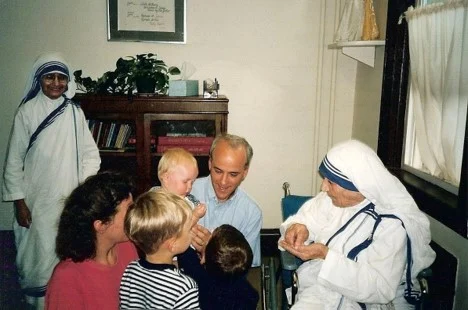
Max Towey: This is one part where I can somewhat speak to it, having been to over a dozen Missionaries of Charity homes in the world. I do wonder, with these criticisms, what they think the money actually went to. You know, there is nothing fun in these homes for the sisters there.
Jim Towey: No, there’s no special snack room.
Max Towey: There’s no hidden residence. You could not find a hotel with a less comfortable setup than —
Jim Towey: You don’t see the sisters going, “Where’s the clicker? Where’s my laptop? Where’s my iPad?” I mean, there’s not a single television in any of their homes.
They only began to use the internet themselves because governments forced them to do online financial reporting. So only in the last ten years did you see any emails whatsoever from Missionaries of Charity sisters. So the reality is they live austere, mortified lives. They get up at 4:40 in the morning every day. They eat [unclear] food. They get to go home to see their family once every ten years.
I mean, Christopher Hitchens and those critics – Chatterjee in India, he’s a celebrated critic of Mother, a guy who did abortions in the UK, who, you know, has an ax to grind with Mother because he feels she’s giving India a bad look by showing that it has so many poor people – all these critics and their lifestyles, it’s just an offense to compare it to what the Missionaries of Charity do, which they love, you know. But that gives them the freedom to criticize. And they know the sisters aren’t going to defend themselves publicly, and they don’t. They’ve got better things to do.
Max Towey: Was Mother Teresa jet-setting around the world, riding first class and taking personal gifts while running her charity?
Jim Towey: No, she wasn’t jet-setting. She was going around the world, traveling to so many countries at the Pope’s request, often opening up missions in all these countries. She spent her first ten years in Calcutta – didn’t leave India the first 30 years she lived there. That’s not exactly a jet-setter. But as she became more celebrated, she had the opportunity to get into places where the Catholic Church was not welcome.
So she got into Cuba, and she got into Russia long before the Wall [in Berlin fell]. So she was traveling a great deal. The airlines insisted she fly first class. She never bought a first-class ticket in her life. And she would fly first class only because they didn’t want her in the cabin stirring up a commotion, because the food carts couldn’t get down the aisles. Too many people were crowding to see her, talk to her. And so they put her in first class. And wealthy people – as she was very old, in her 80s – often would let her use their small plane to get her from point A to point B so that she could rest, and her back was killing her. And so she accepted that.
But she never paid for any of these things. They were offered. And if they weren’t offered, she didn’t avail herself of that. People don’t realize that even into her 80s, she was still taking basic train service in India, in these crowded coaches that you wouldn’t want to travel an hour in. So again, it’s easy. You know, Hitchens would say she flew first class, and it’s catchy.
But he doesn’t explain that the reason she did was because of the airlines begging her to, and that she never bought a ticket, and it wasn’t her desire to fly first class. But people want to paint her as a jet-setter, you know. Go look at her closet. One pair of sandals, and that was it. And a sweater.
Max Towey: Would love to end with some rapid-fire. Number one: Is it true she rejected pain medicines?
Jim Towey: False. She took them herself, and she gave the poor pain medicines if she had them.
Max Towey: Number two: They performed forced baptisms on the dying?
Jim Towey: Never saw it happen. She did baptize people that requested it, that consented. Whether there’s an overzealous nun out there baptizing – if they’re doing it, that’s a rogue action, because it’s also bad theology. And in India, it gets you banned. So the idea that she was doing forced baptisms, I find, flies in the face of the obvious, which is that India requires you to register any baptism.
They have anti-conversion laws in half of the states of India. If Mother Teresa and her nuns were doing forced baptisms, they would have been kicked out of India. And in the AIDS home where I lived, you know, people were dying by the dozens, and nobody was pressured or forced or coerced into baptism. Some were baptized, but I would say most weren’t.
Max Towey: Did she secretly channel money to the Vatican through her Vatican bank account?
Jim Towey: No. She had a Vatican bank account, and she had bank accounts in New York and in other places, in Rome and in countries throughout the world. But no – the Vatican bank is very useful when you’re trying to wire money to Africa and the missions there. And it gets very complicated when you’re trying to wire United States money to Cuba and places that are on Department of State watchdog lists. So.
Max Towey: Well, sir, this was a very informative interview, and I thank you sincerely for your time. Does this count as my call for the week?
Jim Towey: This is all wholehearted and free service to my beautiful son. But it is good to debunk these myths, because they’re everywhere and they just pop up, and the sisters just do not spend time trying to chase after all of this. They’re doing their work. So I’m glad you’re covering it.
(RocaNews is the US’ largest Gen Z-focused news source, with more than 4M followers and subscribers across platforms. You can subscribe to RocaNews here.)